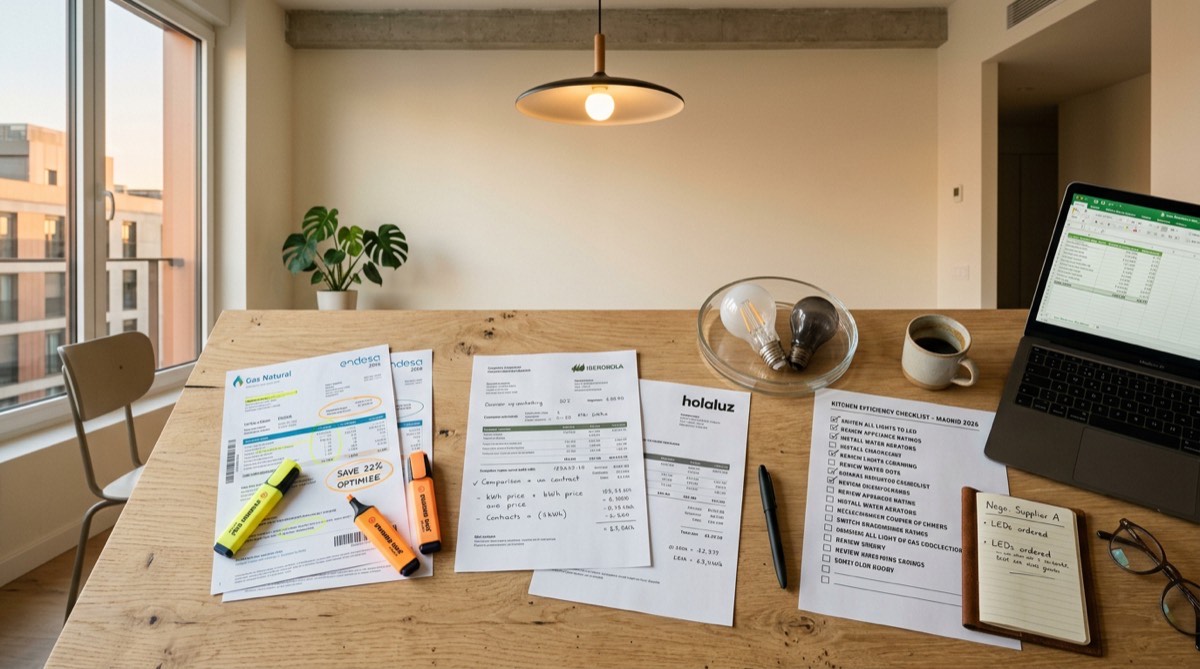
Reducing costs is not the same as cutting back. Cutting back means removing quality, reducing staff, or buying inferior products — and that kills a restaurant in the medium term. Truly reducing costs means optimizing: buying better, wasting less, consuming less energy, negotiating with data, and structuring processes to eliminate inefficiencies. A typical restaurant in Spain has between 8% and 15% of avoidable costs that don't appear on any P&L line but eat into the margin.
- Your electricity, gas and water bills go up every quarter but you don't know exactly why
- Buying from the same supplier for years without comparing prices or negotiating
- You don't have weekly inventory control — you buy when it runs out, not when it makes sense
- Staff shifts are not optimized: excess staff during off-peak hours and shortages during peak periods
- You haven't audited the shrinkage in the last 6 months
- Cleaning, paper, cups and consumables costs are growing unchecked
If you recognize 2 or more of these situations, your restaurant needs a professional diagnosis.