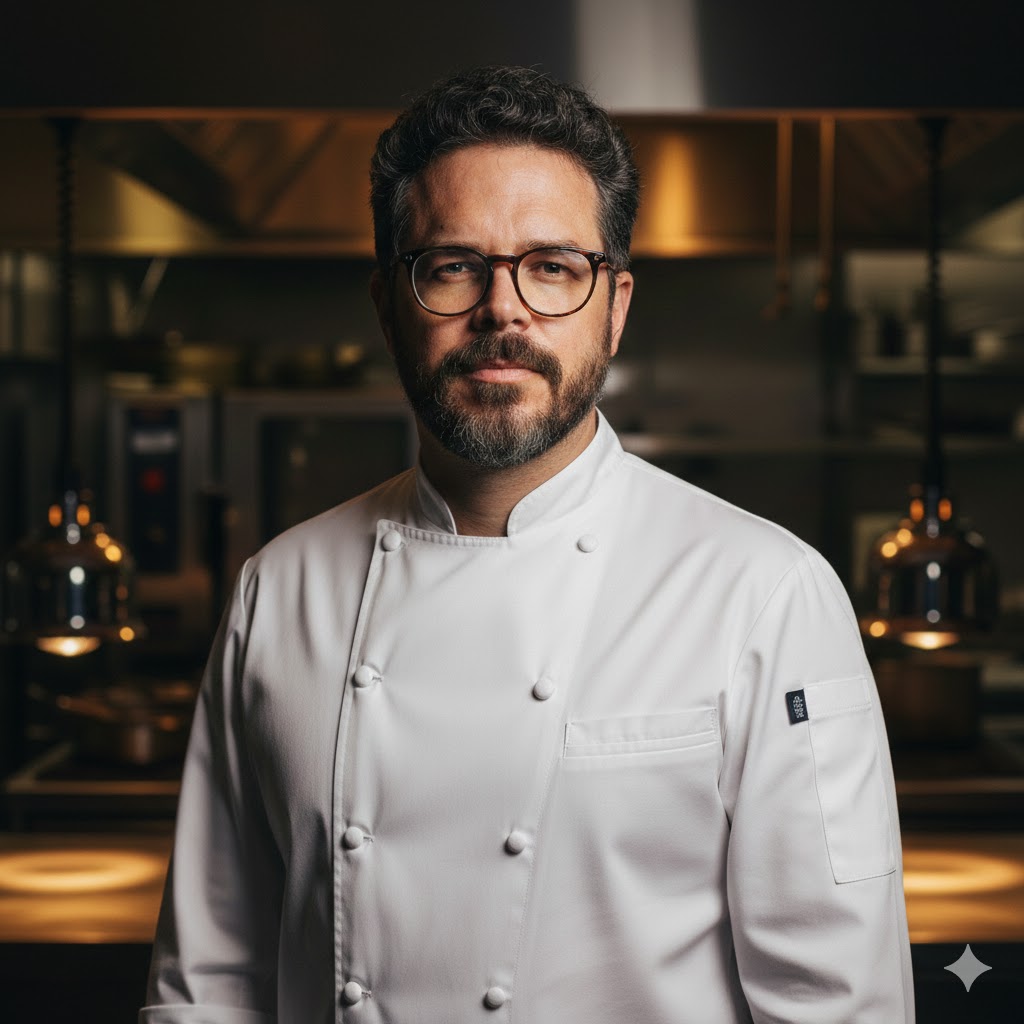
- 1979 — Year of birth
- At the age of 17 — Entered professional hospitality as a kitchen assistant
- 2005 — Founded the Cocineros.info portal
- 2010 — Sold Cocineros.info to the Sosa Ingredients group and launched his career as a culinary consultant
- May 2018 – May 2022 — Outsourced culinary direction of Venture Restaurants Group (Tenerife), 16-17 restaurants, without exclusivity
- May 2022 — Returned to Madrid and relaunched independent consultancy
- 30 years of experience in hospitality and consultancy since 2010, in parallel and not cumulative
- +120 restaurant projects advised in Spain, LATAM and Asia, including projects with Michelin Stars and Repsol Suns
- Full career path: kitchen assistant, cook, chef de partie, chef and chef-owner
- Pioneer in Data Chef and artificial intelligence applied to restaurant management
About us
Chef John Guerrero: 30 years in hospitality and culinary consultancy since 2010
Culinary consultant based in Madrid. He managed his own restaurants before advising those of others. Over 120 projects in Spain, LATAM and Asia.